
History of St. John’s Wort
Ancient Roots
St. John’s Wort, also known as Hypericum perforatum, has been used for over 2,000 years, dating back to ancient Greece. Greek physicians utilized the herb for a variety of purposes, including the treatment of:
Sciatica
Poisonous reptile bites
Anxiety
Insomnia
The Greeks also believed it possessed protective powers. The smell of the plant was said to drive away evil spirits, and it was often hung above statues of gods to keep malevolent forces at bay.
The name Hypericum comes from the Greek words hyper meaning “over” and icon meaning “image.” This reflects the practice of hanging the herb above sacred images as a form of spiritual protection.
Later, the plant was named “St. John’s Wort” because it blooms around June 24th, the feast day of St. John the Baptist. The term wort derives from Old English, meaning “herb” or “plant.”
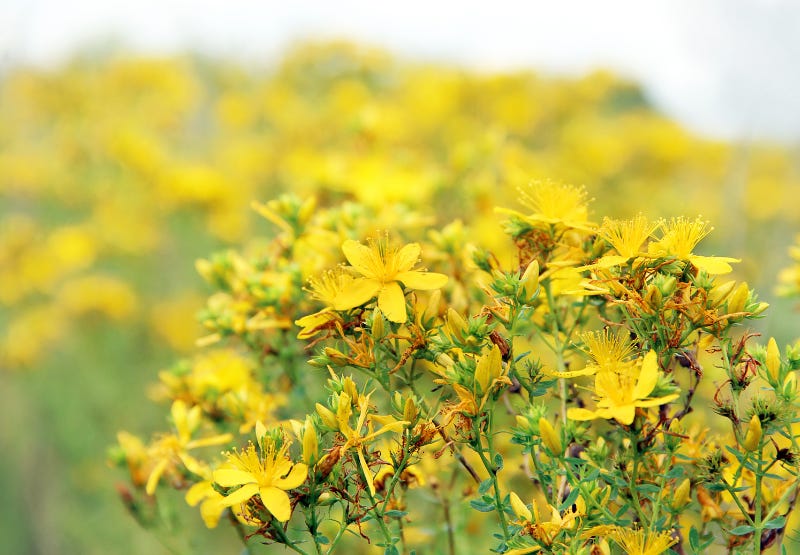
Traditional Use
Throughout history, St. John’s Wort has been cherished for its medicinal properties and diverse applications:
In Europe:
Brewed into teas to treat burns, wounds, and infections.
Used for lung and kidney ailments.
Valued for its antibacterial and antiviral properties, largely due to compounds like hypericin, hyperforin, and flavonoids.
During the Dark Ages:
Used in rituals to protect homes and purify spaces.
A tea made from its leaves was thought to expel evil from people, an early explanation for mental health treatments.
In the Americas:
Native Americans used the herb for its medicinal properties as:
An abortifacient
An antiseptic
An anti-inflammatory
An astringent
In the 1990s, St. John’s Wort gained recognition as “nature’s antidepressant,” becoming widely popular in Britain and America. It is especially effective in managing mild to moderate depression and is preferred by many due to its relatively mild side effects. However, it is worth noting that St. John’s Wort is not suitable for treating severe (major) depression, and its effects can take a few weeks to be noticeable.
Appearance and Growth
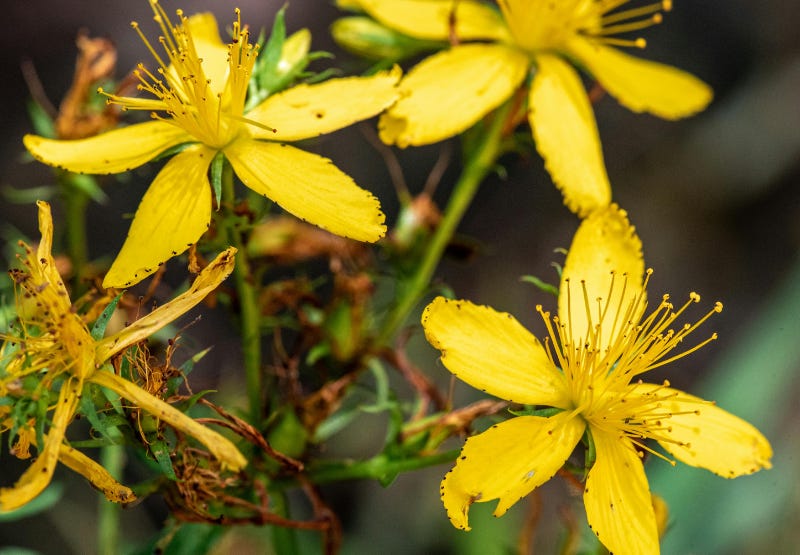
Botanical Description
St. John’s Wort is a sprawling, leafy, herbaceous shrub belonging to the Hypericum genus, which contains over 500 species. It is a perennial plant best identified by:
Bright yellow, five-petaled flowers with numerous stamens, which bloom from June through September.
Small leaves, which appear perforated when held up to the light due to translucent oil glands.
Small, dry fruit capsules that develop in the fall and open when ripe.
The most common species used medicinally is Hypericum perforatum.
Natural Habitat
St. John’s Wort is native to Europe, northern Africa, and western Asia. However, it has since spread across the globe and is now widely distributed in temperate regions. It thrives in open and sunny areas, including:
Rangelands
Fields
Roadsides
Forest clearings
In many regions, the plant is classified as an invasive species, quickly dominating the local ecosystem.
Schedule Your Free Discovery Call Today 📞
Interested in learning more about herbs like St. John’s Wort? Book a FREE discovery video meeting today!
Clinical Applications of St. John’s Wort
Beneficial Chemical Constituents
St. John’s Wort contains several active compounds that contribute to its therapeutic benefits:
Hypericin: Known for its antidepressant, antiviral, and anxiolytic properties.
Hyperforin: Plays a role in modulating mood and promoting a sense of calm.
Flavonoids: Antioxidants that support overall health and reduce oxidative stress.
These compounds are believed to be responsible for most of St. John’s Wort’s wide-ranging medicinal qualities.
Medicinal Properties and Uses
St. John’s Wort has been used for at least 2,000 years to address both internal and external health concerns. Traditional and modern uses include:
Mental Health Support: Known for its antidepressant and anxiolytic effects, particularly for mild to moderate depression and anxiety.
Anti-inflammatory: Helps reduce inflammation, promoting healing in wounds and injuries.
Vulnerary: Effective in treating burns and wounds when applied topically.
Hepatic: Supports liver health and detoxification.
Astringent: Helps tighten tissues and reduce secretions, making it useful for certain skin or mucosal conditions.
Antiviral: Demonstrates potential in combating viral infections.
Clinical Studies
Final Recommendations
Here are Nancy’s St. John’s Wort recommendations:

Some Precautions with St. John’s Wort:
While St. John’s Wort offers many therapeutic benefits, it is essential to use the herb responsibly. Below are some important precautions to keep in mind:
Drug Interactions
St. John’s Wort is known to interact with a variety of pharmaceutical medications by affecting how they are metabolized in the body. These interactions may reduce the effectiveness of certain drugs or cause unwanted side effects. Medications that may interact include:
Antidepressants: Can lead to serotonin syndrome, a potentially life-threatening condition caused by excessive serotonin levels.
Blood thinners (e.g., Warfarin): May reduce their effectiveness, increasing the risk of clotting.
Birth Control Pills: Can reduce contraceptive effectiveness, leading to unintended pregnancies.
Anti-seizure medications: May lower their efficacy, increasing the risk of seizures.
Immunosuppressants (e.g., Cyclosporine): Can reduce the drug’s ability to prevent organ rejection or manage autoimmune conditions.
HIV and cancer medications: Interactions may compromise treatment effectiveness.
Photosensitivity
Using St. John’s Wort (especially at high doses) can increase sensitivity to sunlight, causing:
Skin redness, burns, or rashes during sun exposure.
Eye discomfort in bright light.
It’s recommended to use sunscreen, wear protective clothing, and limit sun exposure when taking St. John’s Wort.
Pregnancy and Breastfeeding
St. John’s Wort is not considered safe for use during pregnancy or breastfeeding due to its hormonal effects, potential impact on fetal development, and lack of sufficient safety data.
Mood Disorders
While St. John’s Wort is effective for mild to moderate depression, it may not be helpful or safe for individuals with:
Severe (major) depression.
Bipolar disorder, as it could trigger episodes of mania or hypomania.
Any psychiatric condition without prior consultation with a healthcare provider.
Allergic Reactions
Some individuals may experience allergic reactions to the herb, such as skin irritation, itching, or rashes. Discontinue use immediately if any adverse reactions occur.
Disclaimer: There is no “one size fits all” when it comes to recommending St. John’s Wort. Because of this, Nancy recommends Booking a 15 Minute Discovery call if you’re interested in taking this wonderful herb. It’s important to consult with a registered clinical herbalist or natural health practitioner trained in clinical herbalism for more resistant and deeper set health issues. They will be able to give a more tailored suggested serving and daily frequency based on your age, gender, body weight, and any present medical conditions.
Resources
Britannica | National Park Service | MayoClinic | Susan Albert | NCCIH | Healthline | Medical News Today | NCBI | UpToDate | Hypericum treatment of mild depressions with somatic symptoms | Efficacy of St. John’s wort extract standardized to hyperforin | St. John’s wort in mild to moderate depression: the relevance of hyperforin for the clinical efficacy