

History of Thyme
Ancient Roots
Thyme (Thymus vulgaris), commonly known as “common thyme” or “garden thyme,” has been revered since ancient times. Its name, Thymus, derives from the Greek words thyo (perfume) and thumos (courage/strength).
Greek Use: Highly valued for its aroma, thyme was burned in temples as incense to purify spaces. The phrase “to smell of thyme” was used as a compliment for sophistication.
Roman Applications: Romans used thyme to flavor cheeses and beverages. They also burned it to repel disease.
Egyptian Significance: Egyptians employed thyme’s antibacterial and antifungal properties for embalming, showcasing its practical importance.
Medieval Symbolism: In folklore, thyme symbolized bravery and protection. Knights carried scarves embroidered with thyme and bees before battles, while its oil and leaves were burned to cleanse homes and temples.
Thyme’s symbolic and practical applications made it indispensable throughout ancient civilizations, blending spiritual rituals with culinary and medicinal usage.
Traditional Use
For centuries, thyme has been relied on for its medicinal, culinary, and aromatic qualities.
Folk Medicine: Thyme oil, derived from flowers and leaves, was prized for antiseptic and antimicrobial effects, aiding respiratory infections, skin issues, and digestive ailments. Dried thyme was also applied to wounds to prevent infection and support healing.
During the Black Death: Bouquets of thyme were carried as protection against illness, thanks to thymol, its potent compound with immune-supporting properties.
Herbal Remedies: Tea was brewed to alleviate gas, expel parasites, and soothe coughs. It was known to enhance mood via serotonin and dopamine production, thyme also offered relaxation and stress relief.
Today, thyme continues to be celebrated for its antibacterial, wound-healing, and mood-enhancing capabilities, supported by modern research.
Appearance and Growth
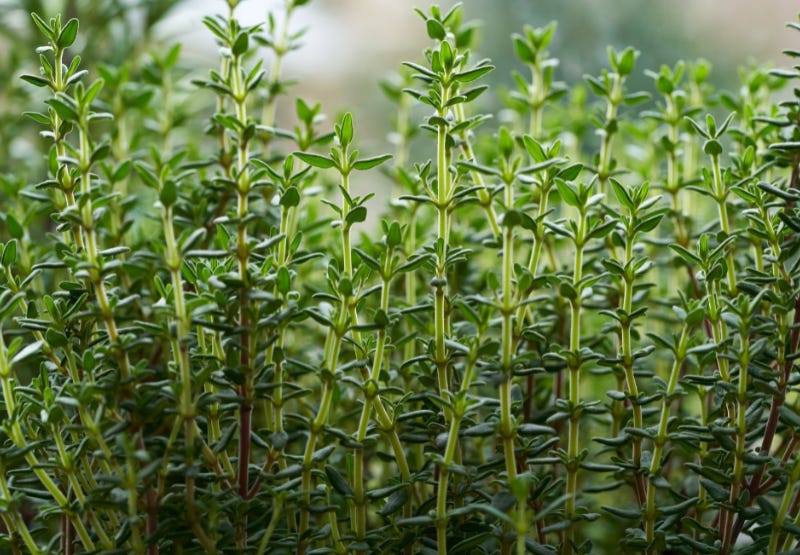
Botanical Description
Thyme is a flowering, perennial dwarf shrub from the genus Thymus, which includes over 350 species.
Leaves: Small, oval-shaped, and gray-green or dark green in color, highly aromatic.
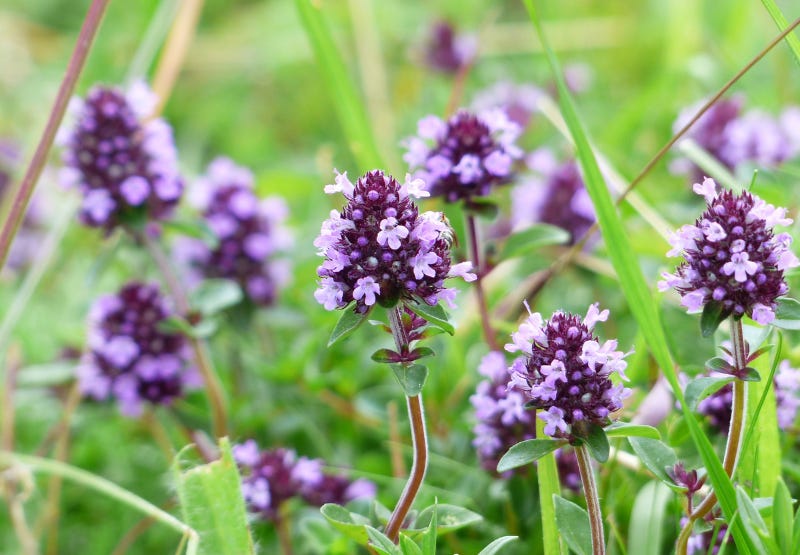
Flowers: Clusters of delicate blossoms bloom late spring to early summer, in shades of white, pink, or light purple.
Species: Common species include Thymus vulgaris, widely cultivated for culinary and medicinal use, and Thymus zygis (Spanish thyme), often used interchangeably.
Natural Habitat
Thyme grows naturally in the Mediterranean region but is now cultivated worldwide due to its adaptability.
Native Areas: Found in Spain, Portugal, France, Italy, and North Africa.
Cultivated Regions: Commercial agriculture has expanded it to Europe, North America, and Canada.
Preferred Conditions: Thrives in dry, well-drained soil with full sun exposure. Hardy enough to survive in rocky, nutrient-poor environments, making it ideal for gardens and wild landscapes.
Schedule Your Free Discovery Call Today 📞
Interested in learning more about herbs like thyme? Book a FREE discovery video meeting today!
Clinical Applications of Thyme
Beneficial Chemical Constituents
Thyme contains bioactive compounds and nutrients that contribute to its versatile therapeutic properties:
Thymol: A primary bioactive compound with strong antimicrobial and antiseptic effects.
Carvacrol: Known for its antiviral, antifungal, and anti-inflammatory properties.
Eugenol: An antioxidant with analgesic and antimicrobial benefits.
Flavonoids: Including luteolin and apigenin, which provide antioxidant protection against free radical damage.
Phenols: Aid in reducing inflammation and supporting immune health.
Iron, Calcium, and Manganese: Essential nutrients for blood health, bone strength, and enzymatic functions.
Vitamin K: Supports blood clotting and contributes to bone health.
Medicinal Properties and Uses
Thyme has been used for centuries as both a medicinal herb and a culinary ingredient. Its wide range of properties makes it a highly valued herb in traditional and modern applications:
Antimicrobial and Antiviral: Effective against bacteria, viruses, and fungi, thyme is used to treat respiratory infections and skin conditions.
Anti-inflammatory: Reduces inflammation, helping alleviate conditions such as arthritis and other inflammatory disorders.
Antiparasitic: Historically used to expel intestinal parasites and promote digestive health.
Antifungal: Useful in treating fungal infections like candida.
Antispasmodic: Relieves muscle spasms and aids in soothing coughs and respiratory discomfort.
Nutrient-Rich Profile: Its iron, manganese, and calcium content support bone health, metabolism, and overall vitality.
Synergistic Herb: When combined with other medicinal herbs, thyme enhances the potency of herbal formulas, amplifying their effects.
Thyme’s broad spectrum of benefits makes it a cornerstone of herbal medicine, contributing to improved immunity, digestion, and overall well-being.
Clinical Studies
Antimicrobial & Antibacterial
The traditional use of Thyme in the treatment of sore throats has gained attention in many studies in the scientific community. They suggest that Thyme essential oil and extract is one of nature’s most powerful antimicrobials. A study entitled “Antimicrobial activity of essential oils and carvacrol, and synergy of carvacrol and erythromycin, against clinical, erythromycin-resistant Group A Streptococci,” written by Gloria Magi et al and published in 2016 in the Frontiers in Microbiology journal studied the natural antimicrobial substances in plants and their components. They found that the combination of the constituents thymol and carvacrol can act as the main weapon against many different bacteria strains. Another recent study entitled “Antimicrobial activity of essential oils and other plant extracts,” written by K A Hammer et al and published in the Journal of Applied Microbiology in 2001, aimed to test a large number of essential oils and plant extracts against a diverse range of organisms to create directly comparable, quantitative, antimicrobial data. They found that even a small amount of Thyme oil and extracts (both acetone and water) may be effective against a variety of bacteria such as Escherichia coli (E. coli), Staphylococcus aureus, and Candida albicans.

Antiviral & Antispasmodic
Although Thyme has been used for centuries to treat respiratory conditions, it is finally gaining traction in the scientific world. This is due to Thyme being rich in plant phenols such as thymol and carvacrol. They are considered to have powerful anti-spasmodic qualities, which makes them potent and effective cough suppressants. On the other hand, the antiviral and expectorant qualities of Thyme help to thin out excessive mucus, making it easier to expel when coughing. Due to the overwhelming research available, the German Commission E has actually approved Thyme oil in the treatment of bronchitis, whooping cough, and upper respiratory inflammation. One clinical trial entitled “Evaluation of the non-inferiority of a fixed combination of thyme fluid- and primrose root extract in comparison to a fixed combination of thyme fluid extract and primrose root tincture in patients with acute bronchitis. A single-blind, randomized, bi-centric clinical trial,” written by Joerg Gruenwald et al and published in 2006 in the Arzneimittelforschung (Drug Research) journal aimed to look at the effectiveness of Thyme for acute bronchitis. They discovered that patients who were given extracts of dry Thyme and Evening Primrose had significantly better healing times than those given the placebo. Another double-blind, placebo-controlled clinical trial entitled “Efficacy and tolerability of a fluid extract combination of thyme herb and ivy leaves and matched placebo in adults suffering from acute bronchitis with productive cough,” written by Bernd Kemmerich et al and published in 2006 in the Arzneimittelforschung (Drug Research) journal aimed to study the effectiveness in the combination of Thyme and Ivy leaves in patients suffering from acute bronchitis with a productive cough. They found that patients with acute bronchitis who were given the combination displayed a 50% reduction in coughing fits two days sooner than those given the placebo.

Additional Health Benefits of Thyme
Digestive Health
Thyme oil and its individual constituents have been shown in several studies to have beneficial effects on the gut microbiome. A recent review entitled “The Potential Gastrointestinal Health Benefits of Thymus Vulgaris Essential Oil: A Review,” written by Abdulaziz Almanea et al and published in 2019 in the Biomedical and Pharmacology Journal discusses the many effects Thyme has on the gastrointestinal system. Due to the antispasmodic effects of the plant phenols thymol and carvacrol, this powerful herb has the potential to help relax the smooth muscles of the ileum – resulting in cramping and bloating relief. Additionally, Thyme can also be a useful anthelmintic (used to destroy parasitic worms such as hookworm). One study entitled “Thymus vulgaris L. essential oil and its main component thymol: Anthelmintic effects against Haemonchus contortus from sheep,” written by Luis E Ferreira et al and published in 2016 in the Vet Parasitol Journal aimed to evaluate the main component, thymol, and its effect on Haemonchus contortus from sheep (a close relative of the human hookworm species). They found that both the essential oil and thymol were highly effective against the three main stages of H. contortus – by almost 100%.

Heart Health
One of Thyme’s phenolic compounds, Rosmarinic acid, has been linked to several benefits such as reduced inflammation and blood sugar levels, as well as increased blood flow. In one study entitled “Effect of rosmarinic acid on the arterial blood pressure in normotensive and hypertensive rats: Role of ACE,” written by Luciana Garros Ferreira et al and published in 2018 in the Phytomedicine journal, they aimed to verify the effect of rosmarinic acid on blood pressure through inhibitory activity on angiotensin converting enzyme in rats. They found that rosmarinic acid was effective in reducing blood pressure. Although more research is needed to investigate these effects in humans, the results look promising.
External Wound Healing & Recovery
For centuries Thyme oil has been commonly used as an antiseptic due to its antibacterial and antifungal properties. A study entitled “Antibacterial and Wound Healing Properties of Thymol (Thymus vulgaris Oil) and its Application in a Novel Wound Dressing,” written by P. Mollarafie et al and published in 2015 in the Journal of Medicinal Plants aimed to study the use of thymol as an antibacterial and wound healing agent in the development of a novel wound dressing. They found that it not only provided antibacterial and wound-healing properties, but also increased the elasticity, porosity, and mechanical strength of the dressing itself. On the other hand, Thyme has also been shown to have anti-inflammatory properties. In the recent 2020 review entitled “A Focused Insight into Thyme: Biological, Chemical, and Therapeutic Properties of an Indigenous Mediterranean Herb” written by Dalal Hammoudi Halat et al and published in the Nutrients journal, they explain how the plant phenol, thymol, is well known for its antioxidant, anti-inflammatory and antimicrobial activity. Due to these properties, Thyme may be beneficial in targeting skin conditions such as eczema (to reduce inflammation) and acne(to get rid of bacterial infections).

Final Recommendations
Here are Nancy’s Thyme recommendations:

Some Precautions with Thyme:
While thyme is generally considered safe for culinary and medicinal use when consumed in moderation, there are certain precautions to be mindful of:
Allergic Reactions: Some individuals may be allergic to thyme, especially those with allergies to plants in the Lamiaceae family (e.g., oregano, mint, sage). Symptoms of an allergic reaction can include skin irritation, itching, and, in severe cases, difficulty breathing. Discontinue use immediately if an allergy is suspected.
Pregnancy and Breastfeeding: Pregnant or breastfeeding women should limit thyme use to culinary amounts. In large medicinal doses, thyme may stimulate uterine contractions, which could pose risks during pregnancy.
Bleeding Disorders: Thyme contains vitamin K, which can influence blood clotting. Excessive consumption may interfere with anticoagulant medications (e.g., warfarin) or exacerbate bleeding disorders.
Drug Interactions: Thyme’s active compounds, such as thymol, may interact with certain medications, including:
Anticoagulants: Increased risk of bleeding.
Antidiabetic medications: Thyme may enhance blood sugar-lowering effects, leading to hypoglycemia.
Sedatives: Thyme’s calming properties may amplify the effects of sedative drugs.
Always consult a healthcare provider before adding thyme to an existing medication regimen.
Overconsumption: Excessive consumption of thyme oil or strong extracts may cause:
Nausea, vomiting, or gastrointestinal discomfort.
Dizziness or headaches in sensitive individuals.
Use in Essential Oil Form: Thyme essential oil is highly concentrated and should be diluted before being applied to the skin. Undiluted use may cause irritation, redness, or sensitivity. It should not be ingested unless supervised by a qualified herbalist or healthcare professional.
Disclaimer: There is no “one size fits all” when it comes to recommending Thyme. Because of this, Nancy recommends Booking a 15 Minute Discovery call if you’re interested in taking this wonderful herb. It’s important to consult with a registered clinical herbalist or natural health practitioner trained in clinical herbalism for more resistant and deeper set health issues. They will be able to give a more tailored suggested serving and daily frequency based on your age, gender, body weight, and any present medical conditions.
Resources
Medical News Today | Thyme PDF | PlantSnap | Healthline | ScienceDirect | Thyme Benefits | Herbs to Lower Blood Pressure | WebMD